
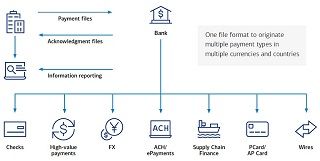
Behind every wager placed at an online casino lies a complex, multi-layered payment infrastructure. While the player experience has been reduced to a few taps on a screen, the underlying architecture involves encryption protocols, payment gateways, acquiring banks, and compliance engines working in concert. Understanding how online casino deposits actually work is valuable not only for players seeking faster transactions but also for developers, operators, and fintech professionals building within this space.
The Anatomy of a Casino Deposit
At its core, a deposit is a transfer of value from a player’s funding source to the casino’s merchant account. What distinguishes casino deposits from ordinary e-commerce transactions is the regulatory scrutiny and risk profile attached to gambling. This means every deposit passes through several checkpoints before funds become available for play.
The Primary Stages
The gap between front-end crediting and back-end settlement is a critical architectural detail. Casinos often absorb short-term risk by crediting accounts instantly, relying on their own reserves while the banking layer finalizes the transfer.
Payment Methods and Their Technical Characteristics
The method a player chooses determines speed, cost, and reliability. Each category carries distinct technical trade-offs.
| Debit/Credit Cards | Instant to 48 hours | High chargeback risk; requires 3D Secure authentication |
| E-Wallets | Instant | Intermediary layer that shields banking data from the casino |
| Bank Transfers | 1–5 business days | Direct rails; low cost but limited real-time capability |
| Cryptocurrency | Minutes | On-chain confirmation; irreversible and pseudonymous |
| Prepaid Vouchers | Instant | No bank link; strong privacy but limited withdrawal options |
Why E-Wallets Dominate
E-wallets function as a buffering layer between the player’s bank and the casino. From a technical standpoint, the casino never sees the player’s primary banking credentials. Instead, it receives a confirmation token from the wallet provider. This reduces PCI-DSS scope for the operator and adds a privacy shield for the user, which is precisely why this category remains dominant in regulated markets.
Security Protocols Behind the Scenes
Security in casino deposits is not a single feature but a stack of overlapping defenses.
- End-to-End Encryption: Data in transit is protected against interception using industry-standard ciphers.
- Tokenization: Card details are replaced with non-sensitive tokens, meaning a breach of the casino’s database does not expose raw payment data.
- 3D Secure and SCA: Strong Customer Authentication, mandated under frameworks like PSD2 in Europe, adds an identity verification step during checkout.
- Fraud Scoring Engines: Machine learning models analyze device fingerprints, IP geolocation, and behavioral patterns in milliseconds.
- Segregated Accounts: Licensed operators are typically required to hold player funds in segregated accounts, separate from operational capital.
These layers operate silently. A player clicking “Deposit” rarely sees the dozen or more micro-decisions executed within a few hundred milliseconds.
Compliance: The Invisible Gatekeeper
Regulation shapes deposit mechanics more than any other factor. Jurisdictional rules determine which payment methods are permitted, what verification is mandatory, and how quickly funds can move. Key compliance requirements include:
- KYC Verification: Identity confirmation before or shortly after the first deposit.
- AML Monitoring: Ongoing transaction surveillance to detect structuring or suspicious patterns.
- Geolocation Checks: Ensuring the player is physically located in a permitted jurisdiction.
- Self-Exclusion and Responsible Gambling Controls: Deposit limits enforced at the infrastructure level, not just the interface.
For operators, integrating compliance into the deposit pipeline is non-negotiable. A single oversight can result in license suspension or heavy fines, which is why modern platforms treat compliance as a first-class engineering concern rather than an afterthought.
The Future of Casino Deposit Technology
The deposit layer is evolving quickly. Open banking APIs allow direct account-to-account transfers that bypass card networks entirely, reducing fees and chargeback exposure. Real-time payment rails, such as those being deployed in various regions, are shrinking settlement windows from days to seconds. Meanwhile, blockchain-based solutions offer programmable escrow and instant auditability, though regulatory acceptance remains uneven.
What unites these developments is a common trajectory: faster settlement, stronger identity assurance, and less friction for the legitimate player. The technical complexity will only increase, but the goal remains the same—move value securely from player to platform in a way that satisfies banks, regulators, and users simultaneously.
Conclusion
Online casino deposits are far more than a checkout button. They are the convergence point of cryptography, payment infrastructure, fraud analytics, and regulatory compliance. For players, understanding this flow explains why some deposits clear instantly while others require verification. For professionals in the tech and fintech space, it reveals a domain where engineering precision directly determines user trust, operational cost, and legal standing. As payment rails and identity frameworks continue to mature, the deposit experience will become faster and more secure—but the layered architecture beneath it will remain as essential as ever.