
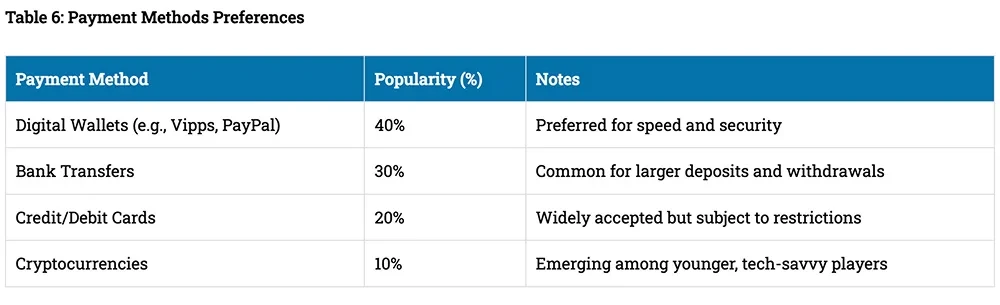
In the rapidly evolving landscape of online gambling, payment infrastructure has become a critical differentiator for operators and a decisive factor for players. The method by which funds move into and out of a gambling account affects transaction speed, cost efficiency, security posture, and overall user experience. For platforms operating in this space, selecting the right mix of payment rails is not merely a logistical concern—it is a strategic imperative tied to conversion rates, regulatory compliance, and customer retention.
This guide provides a detailed comparison of the primary payment methods used across the online gambling ecosystem, evaluating each against the criteria that matter most: speed, security, cost, accessibility, and regulatory fit.
Key Evaluation Criteria for Gambling Payments
Before comparing individual methods, it is essential to establish a consistent framework. Every payment option should be assessed against the following dimensions:
- Transaction Speed: How quickly deposits are credited and withdrawals are settled.
- Security and Encryption: The strength of fraud prevention, data protection, and chargeback controls.
- Cost Structure: Fees charged to operators and, in some cases, to players.
- Accessibility and Reach: Geographic availability and device compatibility.
- Regulatory Compliance: Alignment with KYC, AML, and jurisdictional gambling laws.
- Anonymity and Privacy: The degree of personal data exposure during transactions.
Major Payment Methods Compared
1. Credit and Debit Cards
Cards remain the most familiar payment method globally, with Visa and Mastercard dominating transaction volumes. However, many major card networks restrict gambling transactions, particularly in jurisdictions with strict regulations. Where permitted, cards offer instant deposits but often impose higher chargeback risk.
- Speed: Deposits are typically instant; withdrawals may take one to five business days.
- Security: Strong encryption and 3D Secure authentication, but chargeback exposure is significant for operators.
- Cost: Processing fees range from 2% to 5%, with additional penalties for chargebacks.
- Compliance: Heavily restricted in certain markets, requiring careful geo-filtering.
2. E-Wallets
Services such as PayPal, Skrill, Neteller, and ecoPayz have become staples in the gambling sector. They act as intermediaries, shielding banking details from merchants and enabling faster withdrawals than traditional card rails.
- Speed: Deposits are instant; withdrawals are typically processed within hours.
- Security: Two-factor authentication and encrypted storage reduce fraud risk.
- Cost: Fees vary but are generally moderate, with some providers offering preferential rates for gambling merchants.
- Compliance: Widely accepted but subject to local licensing requirements.
3. Bank Transfers and Open Banking
Direct bank transfers, including instant options enabled by open banking frameworks, offer a high-trust rail with minimal chargeback risk. Open banking solutions, in particular, allow real-time account-to-account payments with strong authentication.
- Speed: Instant in open banking environments; same-day or next-day for traditional transfers.
- Security: Bank-grade authentication and reduced fraud exposure.
- Cost: Lower than card processing in many cases.
- Compliance: Strong alignment with KYC and AML requirements.
4. Cryptocurrencies
Bitcoin, Ethereum, and stablecoins have carved out a niche in the gambling world, prized for speed, pseudonymity, and borderless accessibility. However, volatility and regulatory scrutiny remain challenges.
- Speed: On-chain confirmations range from seconds to minutes; stablecoins offer greater predictability.
- Security: Blockchain immutability enhances transparency but irreversible transactions increase user risk.
- Cost: Network fees fluctuate, particularly during congestion.
- Compliance: Increasingly regulated; some jurisdictions prohibit crypto gambling entirely.
5. Prepaid Cards and Vouchers
Paysafecard and similar prepaid solutions allow players to deposit without linking a bank account. They are popular among users who prioritize privacy and spending control.
- Speed: Deposits are instant; withdrawals are often unavailable or limited.
- Security: No sensitive financial data shared with the operator.
- Cost: Fees are typically low but vary by region.
- Compliance: Generally accepted, though limits may apply.
Comparison at a Glance
| Cards | Instant | 1–5 days | High | Medium–High | Restricted |
| E-Wallets | Instant | Hours | High | Medium | Broad |
| Bank Transfer | Instant–1 day | Same day–2 days | Very High | Low–Medium | Strong |
| Cryptocurrency | Minutes | Minutes | High (irreversible) | Variable | Mixed |
| Prepaid/Vouchers | Instant | Limited | High | Low | Broad |
Strategic Considerations for Operators
For gambling platforms, the optimal payment stack is rarely a single method. Instead, a diversified approach mitigates risk and maximizes accessibility. Operators should consider the following:
Conclusion
Comparing online gambling payment methods reveals a landscape defined by trade-offs. Cards offer familiarity but carry chargeback risk. E-wallets balance speed and security. Bank transfers and open banking provide trust and compliance advantages. Cryptocurrencies deliver borderless speed at the cost of regulatory uncertainty. Prepaid options serve privacy-focused users but limit withdrawal flexibility.
For operators, the strategic path forward lies in offering a curated mix of payment options tailored to audience demographics and regulatory environments. For players, understanding these differences empowers smarter, safer, and more cost-effective choices. In a sector where milliseconds and trust margins matter, payment infrastructure is not a back-office function—it is a competitive advantage.