
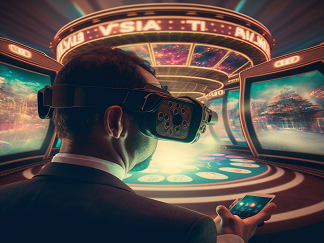
The convergence of virtual reality and online gambling is no longer a speculative concept confined to tech conferences and futuristic mockups. It is an emerging reality, one that promises to fundamentally reshape how players experience casino gaming. As VR hardware becomes more accessible and network infrastructure matures, the virtual reality casino stands poised to transition from novelty to mainstream vertical. For operators, developers, and players alike, understanding this trajectory is essential.
From Flat Screens to Full Presence
Traditional online casinos, for all their convenience, remain anchored to a two-dimensional interface. Players click buttons, watch reels spin, and interact with digitized versions of physical games. Virtual reality dismantles that barrier. By strapping on a headset, users enter a fully rendered casino environment—complete with ambient lighting, spatial audio, and avatars representing fellow players and dealers.
The psychological shift is significant. Presence, the sensation of genuinely being somewhere, transforms passive consumption into active participation. Instead of viewing a blackjack table, a player sits at it. Instead of hearing a dealer’s voice through speakers, they perceive it from a specific direction, synchronized with lip movement. This level of immersion is not merely aesthetic; it influences engagement, session length, and emotional investment.
Technological Pillars Driving Adoption
Several converging technologies underpin the viability of VR casinos:
- Standalone headsets: Devices such as the Meta Quest series eliminate the need for expensive PCs, lowering the barrier to entry.
- Hand and eye tracking: Natural gesture controls allow players to pick up chips, deal cards, or spin wheels without physical controllers.
- Cloud rendering: Offloading graphics processing to remote servers enables photorealistic environments on lightweight hardware.
- Blockchain and digital currencies: Secure, transparent transactions support in-world economies and provably fair gaming mechanics.
- 5G and edge computing: Low-latency connections are critical for real-time multiplayer interactions and live dealer integration.
Each of these pillars has matured to the point where a credible VR casino experience is technically achievable. The remaining challenges are primarily commercial, regulatory, and social rather than purely engineering-based.
Key Features of Next-Generation VR Casinos
What will distinguish a leading VR casino from a simple 360-degree video of a gambling floor? The most forward-thinking platforms are already defining a feature set that blends entertainment, social interaction, and convenience.
Social Presence and Multiplayer Dynamics
Casinos have always been social venues. VR restores that dimension to online play. Players can converse via spatial voice chat, celebrate wins with nearby avatars, and form temporary teams for tournaments. Social presence also introduces new retention mechanics: friendships, rivalries, and community events that are difficult to replicate on a flat screen.
Live Dealers in Virtual Space
Live dealer games have become a cornerstone of online casinos, but they typically stream a physical studio onto a 2D screen. In VR, the dealer can be motion-captured and rendered as a full three-dimensional avatar, seated across from the player at a virtual table. The result is a hybrid experience that combines the authenticity of human interaction with the flexibility of digital environments.
Personalized Environments
VR casinos can offer themed rooms that adapt to player preferences. A high roller might enter a private, gold-trimmed salon. A casual player might prefer a neon-lit, retro-arcade atmosphere. Operators can also use dynamic environments to promote events, seasonal campaigns, or branded partnerships without physical renovation costs.
Regulatory and Responsible Gaming Considerations
The immersive nature of VR raises important questions for regulators and responsible gaming advocates. A more engaging experience can translate into longer sessions and higher spending, which intensifies the need for robust safeguards.
| Elevated immersion | Increased session duration | Mandatory break reminders within the headset |
| Identity verification | Difficulty confirming age and location | Integration with KYC providers and geofencing |
| Virtual currency confusion | Blurred perception of real money | Clear, persistent balance displays in-world |
| Data privacy | Biometric and behavioral tracking | Transparent consent and data minimization |
Jurisdictions that license online gambling will need to adapt frameworks originally designed for websites and apps. Some may treat VR casinos as a distinct category, while others may extend existing online gambling licenses to cover immersive formats. Operators should anticipate a patchwork of rules and design for the strictest plausible standard.
The Path to Mainstream Adoption
Widespread adoption will not happen overnight. Several conditions must be met:
Industry analysts project that early adopters will be younger, tech-savvy players who already engage with online casinos and VR gaming separately. As the technology matures, the demographic will broaden. Eventually, VR may become one of several standard access methods for online gambling, alongside mobile apps, desktop clients, and smart TV interfaces.
What This Means for Stakeholders
For casino operators, the strategic imperative is to experiment now. Pilot programs, partnerships with VR developers, and early licensing discussions will provide invaluable learning. For game developers, the opportunity lies in native VR design rather than mere porting; the medium rewards spatial creativity and social mechanics. For players, the promise is a more engaging, social, and visually stunning form of entertainment, provided that responsible gaming practices keep pace.
The future of virtual reality casinos is not a question of if but how and when. The technology is ready, the demand is latent, and the commercial incentives are substantial. What remains is the careful, responsible execution that will determine whether VR casinos become a trusted mainstream channel or a cautionary tale. The industry would be wise to choose the former.