
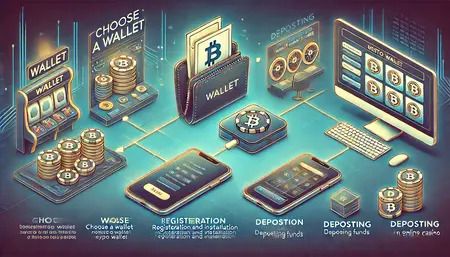
Digital wallets have fundamentally reshaped how consumers move money across the internet, and online gambling sits at the center of that transformation. Where traditional gambling once depended on cash, bank wires, or physical credit card transactions, modern iGaming platforms increasingly rely on wallet-based payment rails to fund accounts, settle wagers, and disburse winnings. For operators, affiliates, and payment engineers, understanding how digital wallets are used for gambling is no longer optional—it is a core competency of the digital economy.
What Is a Digital Wallet in the Gambling Context?
A digital wallet is a software-based system that stores payment credentials—card tokens, bank account links, or pre-funded balances—and authorizes transactions on behalf of the user. In gambling environments, wallets typically fall into three categories:
- Stored-value wallets (e.g., PayPal, Skrill, Neteller) that hold a balance users can deposit into a casino or sportsbook.
- Pass-through wallets (e.g., Apple Pay, Google Pay) that tokenize a card or bank account and transmit the credentials at the point of purchase.
- Cryptocurrency wallets (e.g., MetaMask, Trust Wallet, Ledger) that enable self-custodied or exchange-mediated transfers of digital assets.
Each model carries distinct implications for speed, anonymity, regulatory compliance, and fraud exposure.
The Mechanics: How a Wallet Transaction Flows
Understanding the transaction architecture helps explain why wallets are popular with both players and operators. A typical flow proceeds as follows:
Because the wallet acts as an intermediary, the gambling operator never directly touches the player’s bank credentials—a security benefit that reduces PCI-DSS scope and lowers breach liability.
Why Players Prefer Digital Wallets
The consumer appeal is straightforward and measurable. Digital wallets compress friction, and in gambling, friction directly correlates with abandonment rates.
- Speed. Deposits and withdrawals that once took days via bank transfer now complete in seconds.
- Privacy. Bank statements no longer display casino or sportsbook names, a feature many players value.
- Segmentation. Players can ring-fence a gambling budget in a dedicated wallet, reinforcing responsible-gaming habits.
- Currency flexibility. Multi-currency wallets reduce foreign exchange costs for cross-border players.
These advantages explain why wallet adoption consistently outpaces card usage on mature iGaming platforms.
Operator Benefits and Compliance Obligations
For operators, wallets are not merely a convenience feature—they are a strategic payment rail. They reduce chargeback exposure, since wallet transactions are typically irreversible and authenticated. They also streamline reconciliation, because wallet providers supply structured settlement reports.
However, wallet usage intensifies regulatory scrutiny. Jurisdictions with strict gambling laws require operators to verify the source of funds, monitor for structuring, and report suspicious activity. The table below summarizes the primary compliance considerations.
| Know Your Customer (KYC) | Wallet accounts may be pseudonymous | Verify identity independently of the wallet |
| Anti-Money Laundering (AML) | Rapid transfers complicate tracing | Monitor velocity and structuring patterns |
| Licensing | Wallet providers may be unlicensed locally | Confirm provider approval in each market |
| Responsible Gaming | Instant funding can encourage overspending | Enforce deposit limits and cooling-off periods |
Cryptocurrency Wallets: A Parallel Ecosystem
Cryptocurrency wallets occupy a distinct niche. Because blockchain transactions are pseudonymous and irreversible, they appeal to players in jurisdictions with restricted banking access. Yet this same design creates friction: operators must implement chain analytics, wallet screening, and travel-rule compliance where applicable.
The technical trade-offs are significant:
- Finality. On-chain transfers cannot be reversed, eliminating chargebacks but also removing recourse for errors.
- Volatility. Operators must decide whether to settle in fiat or hold crypto, introducing treasury risk.
- Transparency. Public ledgers enable forensic tracing, which cuts both ways for privacy-minded users.
Security Architecture and Fraud Mitigation
Digital wallets incorporate multiple defensive layers. Tokenization replaces sensitive card data with surrogate values, so a breach at the operator level exposes nothing usable. Biometric authentication ties transactions to a device and a person. Behavioral analytics flag anomalous transfer patterns in real time.
Nevertheless, risks persist. Account takeover, social engineering, and SIM-swap attacks target the wallet layer precisely because compromising a wallet yields immediate access to funds. Best practices include:
The Road Ahead
Digital wallets are converging with open banking, real-time payment networks, and programmable money. As instant settlement becomes the default expectation, gambling operators that treat wallets as a first-class payment infrastructure—rather than a peripheral option—will capture higher conversion, lower fraud losses, and stronger regulatory standing. For technologists and compliance teams alike, the mandate is clear: architect for wallet-native gambling, and build the controls that make it safe, auditable, and scalable.