
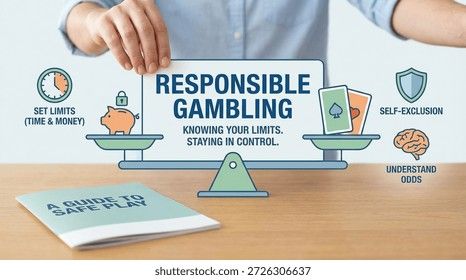
The convergence of mobile technology and online betting platforms has fundamentally reshaped how people engage with games of chance. What was once confined to physical casinos and licensed bookmakers is now accessible through a smartphone in seconds. For technology professionals and digital consumers alike, this convenience introduces a subtle but serious challenge: the line between entertainment and compulsion has never been thinner. Responsible gambling is not merely a matter of willpower — it is a discipline that benefits from structured tools, self-awareness, and deliberate boundaries.
This guide outlines practical, technology-informed strategies for maintaining control over gambling activity, whether you wager occasionally on sports, play poker online, or explore virtual casino platforms.
Understand the Mechanics Before You Participate
Responsible gambling begins with education. Modern platforms are engineered with sophisticated user experience design, variable reward schedules, and real-time feedback loops that mirror the engagement mechanics found in social media and mobile gaming. Recognizing these patterns is the first line of defense.
- House edge: Every game carries a mathematical advantage for the operator. No strategy eliminates it over time.
- Random number generators (RNGs): Certified RNGs ensure outcomes are independent. Past results do not influence future ones — the gambler’s fallacy is a costly illusion.
- Return to player (RTP): A 96% RTP means the platform retains 4% of all wagered money over the long run, not that you will recover 96% of your session budget.
Understanding these fundamentals prevents the cognitive distortions that fuel chasing losses and unrealistic expectations.
Set Hard Limits Before You Log In
The most effective responsible gambling practices are those implemented before a session begins, not during it. Emotional decision-making in the middle of a losing streak is unreliable. Pre-commitment is the solution.
Financial Boundaries
Time Boundaries
Time distortion is a known psychological effect of immersive digital interfaces. Session timers, alarms, and platform-enforced reality checks help counteract it.
- Set a fixed session duration — 30 to 60 minutes is a reasonable starting point.
- Take mandatory breaks. Stand up, hydrate, and disengage from the screen.
- Enable pop-up reminders if the platform provides them.
Leverage Platform and Regulatory Tools
Licensed operators in regulated jurisdictions are required to offer responsible gambling features. These tools exist for a reason — use them proactively rather than reactively.
| Deposit limits | Caps funds added to the account | Set at registration |
| Loss limits | Restricts total losses in a period | Before high-frequency play |
| Session reminders | Alerts after set intervals | Always enable |
| Cool-off periods | Temporary account suspension | After emotional sessions |
| Self-exclusion | Long-term or permanent ban | When control is lost |
Self-exclusion registries, such as GAMSTOP in the United Kingdom or state-level programs in the United States, provide cross-platform blocking that individual willpower cannot match.
Recognize the Warning Signs Early
Problem gambling rarely announces itself. It develops through subtle behavioral shifts that are easy to rationalize. Vigilance matters.
- Preoccupation: Thinking about betting during work, meals, or conversations.
- Concealment: Hiding activity from family or partners.
- Escalation: Increasing stakes to achieve the same excitement.
- Borrowing: Using credit, loans, or borrowed money to gamble.
- Irritability: Restlessness or anxiety when unable to gamble.
If two or more of these apply, it is time to pause and seek external support. Early intervention is dramatically more effective than crisis management.
Apply Technology Mindfully
Technology is neutral — it amplifies whatever behavior it is applied to. Used deliberately, it becomes an ally in maintaining control.
Seek Support Without Stigma
Gambling harm is a public health issue, not a moral failing. Confidential help is widely available and effective.
- National helplines: The National Problem Gambling Helpline (1-800-522-4700) in the U.S. and GamCare in the U.K.
- Peer support: Gamblers Anonymous and SMART Recovery offer structured group programs.
- Professional counseling: Cognitive behavioral therapy has strong evidence for treating gambling disorder.
Reaching out is a sign of strength, not weakness. The earlier support is sought, the less damage accumulates.
Final Considerations for a Sustainable Approach
Responsible gambling is not about abstinence for everyone — it is about informed, bounded participation for those who choose to engage. Treat it as paid entertainment, never as an income strategy. Budget accordingly, set limits before you play, use the tools platforms and regulators provide, and monitor your behavior with the same rigor you would apply to any system you manage.
The digital age has made gambling frictionless. Responsibility requires reintroducing friction where it matters most — at the point of decision. Do that consistently, and gambling remains what it should be: a form of entertainment with defined costs and no illusions.