
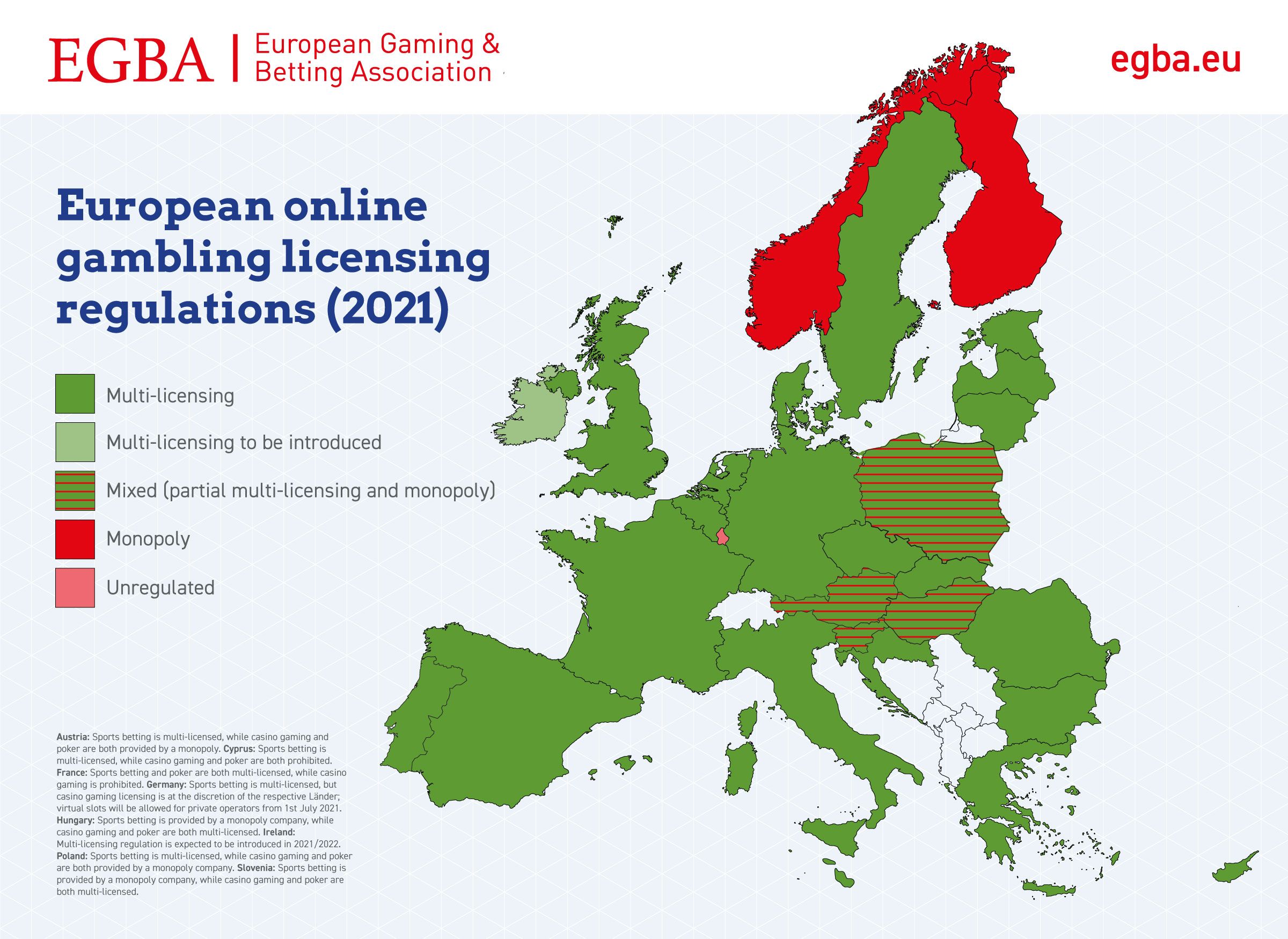
Gambling regulation is one of the most fragmented areas of international law. A practice that is fully legal and licensed in one jurisdiction may be criminalized in another, and a platform that operates lawfully in a dozen markets can be blocked, fined, or prosecuted in the thirteenth. For technology companies, payment processors, affiliates, and operators, understanding why these differences exist is not an academic exercise — it is a core compliance requirement. This article examines the structural, cultural, legal, and economic forces that produce divergent gambling regimes across the globe.
The Absence of a Global Regulatory Framework
Unlike trade, aviation, or intellectual property, gambling has never been subject to a binding multilateral treaty. There is no international gambling authority, no harmonized licensing standard, and no universally accepted definition of what constitutes “gambling.” The result is a patchwork of national and subnational rules that reflect local priorities rather than any shared global consensus.
Two structural factors explain much of this fragmentation:
- Sovereignty over public morality: Gambling is typically classified as a matter of public order and morality, areas where states guard their authority jealously.
- Subsidiarity: In federal systems such as the United States, Germany, and Australia, gambling regulation is often delegated to states or provinces, multiplying the number of applicable regimes.
Because no supranational body can compel harmonization, each jurisdiction calibrates its rules independently — and those calibrations rarely align.
Historical and Cultural Foundations
Legal frameworks are layered artifacts of history. In many jurisdictions, gambling law evolved from religious doctrine, colonial administration, or post-war social policy. These origins continue to shape modern rules even after the underlying attitudes have shifted.
Religious Influence
In jurisdictions where Islamic law forms the basis of the legal system, gambling is explicitly prohibited. In parts of the United States, Protestant moral traditions produced restrictive blue laws that survived into the twentieth century and still influence licensing structures today. In Macau and Hong Kong, by contrast, a long commercial tradition of regulated wagering produced permissive, revenue-oriented regimes.
Path Dependency
Once a regulatory model is established, it tends to persist. Monopolies created decades ago — state lotteries, state-owned sportsbooks, state-run casinos — create constituencies that resist liberalization. Path dependency helps explain why two countries with similar economies and cultures can maintain radically different gambling laws.
Legal and Constitutional Differences
Constitutional structure determines who may regulate gambling and how far that regulation can extend.
| United States | State (with federal overlay) | Commerce Clause; First Amendment |
| Germany | Federal framework, state execution | Freedom of occupation |
| Australia | State and territory | Federal betting and gaming powers |
| Singapore | Central government | Statutory licensing model |
In the United States, the Commerce Clause permits federal intervention in interstate wagering, while the Tenth Amendment reserves police powers to the states. In the European Union, the Court of Justice has repeatedly held that member states may restrict gambling to protect consumers, provided the restrictions are consistent and proportionate. These constitutional anchors produce different degrees of liberalization even within a single common market.
Economic Incentives and Revenue Models
Governments weigh gambling policy against fiscal reality. Where gambling is legal and taxed, it becomes a revenue stream; where it is prohibited, it becomes an enforcement cost. The calculus varies dramatically.
- Revenue dependence: Jurisdictions such as Macau and Monaco derive substantial public income from gambling, creating strong incentives to expand and protect the sector.
- Tourism strategy: Singapore, the United Arab Emirates, and several Caribbean states have used regulated gambling to attract international visitors.
- Prohibition as policy: Countries such as China (with the exception of Macau) and much of the Middle East treat gambling prohibition as a social and religious priority, accepting lost revenue as the cost of enforcement.
- Hybrid approaches: Many nations legalize lotteries and horse racing while restricting casinos and online operators, reflecting competing interest groups rather than a coherent philosophy.
Economic incentives also drive how gambling is taxed. Gross gaming revenue taxes, licensing fees, and point-of-consumption levies produce different operator incentives — and different levels of consumer protection.
Consumer Protection and Public Health Priorities
Modern gambling regulation is increasingly framed as public health policy rather than criminal law. Jurisdictions that adopt this framing tend to impose stricter advertising rules, mandatory self-exclusion schemes, deposit limits, and affordability checks.
The United Kingdom, Sweden, and the Netherlands have moved toward this model. Jurisdictions that frame gambling primarily as a commercial activity — including several U.S. states and parts of Latin America — often prioritize market growth and competitive licensing over harm reduction. The framing determines the regulatory architecture.
Technology and the Challenge of Borderless Operators
Online gambling has exposed the limits of territorial regulation. A server can be located anywhere; a player can be anywhere else. This mismatch has produced three common responses:
Technology also enables regulatory innovation. Blockchain-based reporting, real-time data feeds, and centralized self-exclusion databases allow jurisdictions to enforce rules that were impractical a decade ago — but only where the political will exists to adopt them.
Conclusion: Divergence Is the Default
Gambling laws differ between countries because they answer different questions. Some jurisdictions ask how to maximize revenue; others ask how to minimize harm; still others ask how to enforce a moral or religious prohibition. Constitutional structure, historical path dependency, economic interest, and technological capacity each shape the answer.
For technology companies operating in this space, the practical implication is clear: there is no such thing as a single global gambling compliance strategy. Each market must be assessed on its own terms — its licensing regime, its advertising rules, its payment restrictions, and its enforcement posture. Treating gambling regulation as a monolith is not only inaccurate; it is a compliance risk with legal and financial consequences.