
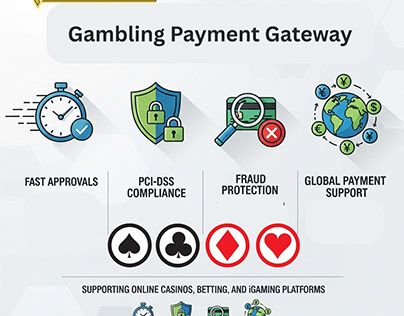
In the high-stakes world of online gambling, the integrity of financial transactions is not merely a feature—it is the foundation upon which the entire industry is built. For operators, payment security represents a complex convergence of regulatory compliance, data protection, and fraud prevention. For players, it is the invisible assurance that their funds and personal information are safeguarded against an increasingly sophisticated threat landscape. This article examines the technical architecture, encryption standards, and operational protocols that underpin secure gambling payments.
The Regulatory and Compliance Framework
Gambling payment security does not exist in a vacuum. It is governed by a layered framework of international standards, regional legislation, and industry-specific mandates. Operators must navigate a matrix of requirements that vary by jurisdiction, yet share common objectives: protecting consumer funds, preventing money laundering, and ensuring transaction transparency.
Key Regulatory Standards
- PCI DSS (Payment Card Industry Data Security Standard): Mandates strict controls for any entity that stores, processes, or transmits cardholder data. Compliance levels range from Level 4 (low transaction volume) to Level 1 (over 6 million transactions annually).
- GDPR and CCPA: Govern the handling of personally identifiable information (PII), requiring explicit consent, data minimization, and the right to erasure.
- AML/CTF Directives: Anti-money laundering and counter-terrorist financing regulations require Know Your Customer (KYC) verification, transaction monitoring, and suspicious activity reporting.
- Local Gambling Licenses: Bodies such as the UK Gambling Commission, Malta Gaming Authority, and Curacao eGaming impose specific technical standards for payment processing and fund segregation.
Non-compliance carries severe penalties, including fines, license revocation, and criminal liability for executives. Consequently, payment security is treated as a board-level priority rather than a back-office function.
Core Technical Safeguards in Gambling Payments
Modern gambling platforms employ a defense-in-depth strategy, layering multiple security controls to mitigate risk at every stage of the transaction lifecycle. These safeguards address three primary vectors: data interception, unauthorized access, and fraudulent activity.
Encryption and Tokenization
All payment data transmitted between the player’s device and the operator’s servers must be protected using TLS 1.3 or higher. This ensures that sensitive information—such as card numbers, CVVs, and banking credentials—cannot be intercepted in transit. At rest, data is encrypted using AES-256 standards.
Tokenization represents a more advanced approach. Instead of storing actual card numbers, the system substitutes a unique, non-sensitive token that maps to the original data in a secure vault. If a breach occurs, the tokens are useless to attackers. This technique significantly reduces the scope of PCI DSS compliance and minimizes exposure.
Multi-Factor Authentication (MFA) and Biometrics
Access control is enforced through MFA, requiring users to provide two or more verification factors: something they know (password), something they have (mobile device), or something they are (fingerprint or facial recognition). Biometric authentication is increasingly integrated into mobile gambling apps, offering both convenience and robust security.
Real-Time Fraud Detection
Fraud detection systems leverage machine learning and behavioral analytics to identify anomalous patterns. These systems analyze hundreds of data points per transaction, including:
- Device fingerprinting and IP geolocation
- Transaction velocity and amount deviations
- Player betting patterns and session duration
- Cross-referencing against global fraud databases
When a transaction is flagged, it can be automatically held for manual review or blocked outright, preventing chargebacks and unauthorized withdrawals.
Secure Payment Methods and Their Trade-offs
The choice of payment method directly impacts the security posture of a gambling platform. Each method carries distinct advantages and vulnerabilities.
| Credit/Debit Cards | Chargeback rights, PCI DSS compliance, 3D Secure authentication | Higher fraud risk, card details stored by merchant, chargeback disputes |
| E-Wallets (PayPal, Skrill, Neteller) | No direct card exposure, tokenized transactions, buyer protection | Account takeover risk, limited anonymity, fees |
| Cryptocurrencies | Blockchain immutability, no chargebacks, pseudonymity | Price volatility, irreversible transactions, regulatory uncertainty |
| Bank Transfers (ACH, SEPA) | Direct bank-to-bank, no intermediary, low fraud | Slow processing, limited dispute resolution, higher KYC burden |
| Prepaid Cards and Vouchers | No personal data linked, budget control | Limited withdrawal options, potential for money laundering |
Operators typically offer a mix of these methods, balancing user convenience with risk management. The most secure platforms segment payment flows, isolating sensitive data from the gaming environment to prevent lateral movement in the event of a breach.
Operational Security and Fund Segregation
Technical controls alone are insufficient without robust operational practices. Licensing authorities increasingly require fund segregation, wherein player deposits are held in separate accounts from the operator’s operating capital. This ensures that if the operator becomes insolvent, player funds remain protected and available for withdrawal.
Additionally, regular penetration testing, vulnerability assessments, and security audits are mandatory. These exercises simulate real-world attacks, identifying weaknesses before malicious actors can exploit them. Third-party auditors, such as those certified by ISO 27001, provide independent validation of security controls.
Incident Response and Breach Mitigation
Even the most secure systems can be compromised. A robust incident response plan includes:
Transparency during a breach is critical for maintaining player trust, though it must be balanced with legal and forensic considerations.
The Future of Gambling Payment Security
As gambling platforms evolve, so too do the threats they face. Emerging technologies such as quantum-resistant encryption, decentralized identity verification, and AI-driven predictive fraud modeling will shape the next generation of payment security. Simultaneously, regulators are tightening oversight, with real-time reporting requirements and cross-border data sharing becoming the norm.
For operators, the imperative is clear: treat payment security not as a cost center, but as a competitive differentiator. Players are increasingly educated about data privacy and will gravitate toward platforms that demonstrate verifiable security commitments. In the gambling industry, trust is the ultimate currency—and it must be earned through relentless technical vigilance.